

Choosing the best sandwich panel for an industrial warehouse depends on more than the panel price. The right solution should match the building's climate, insulation requirements, fire safety requirements, application and expected service conditions.
For many industrial warehouses, PIR, PU and Rockwool sandwich panels are common options. However, there is no single sandwich panel that is best for every project.
The right choice depends on what the building needs to achieve.
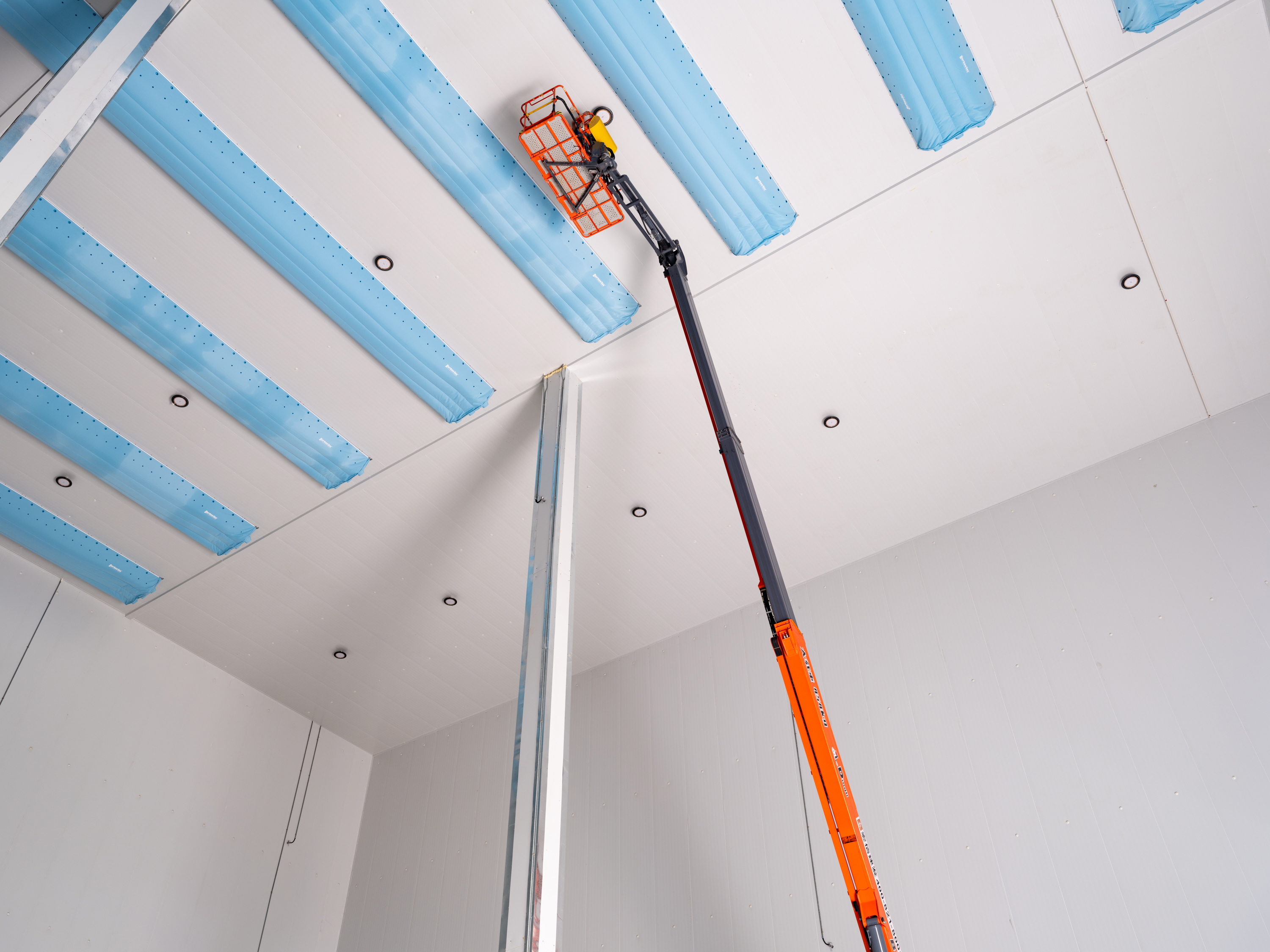
For a standard industrial warehouse, the most suitable insulated sandwich panel depends primarily on the required thermal insulation, fire performance and project environment.
PIR and PU sandwich panels are commonly considered when thermal insulation and lightweight construction are important. Rockwool sandwich panels are often considered when fire performance and acoustic insulation are higher priorities.
A simple way to think about the selection is:
| Warehouse Requirement | Sandwich Panel to Consider |
|---|---|
| General industrial warehouse | PU / PIR |
| High thermal insulation requirement | PIR / PU |
| Fire performance is a major concern | Rockwool / PIR, depending on certified system |
| Cold storage | PU / PIR |
| Cleanroom | PIR / Rockwool or specialized cleanroom panels |
| Industrial building in hot climate | PIR / PU with appropriate thickness |
| Acoustic requirements | Rockwool |
The final selection should always be based on the project's technical requirements and applicable local building regulations.
There is no universal answer to the question “which sandwich panel is best for a factory?”
A factory building may have very different requirements depending on its production process.
For example, a general manufacturing workshop may primarily require thermal insulation and cost-effective construction. A food processing facility may place greater emphasis on hygiene, cleanability and fire performance. A pharmaceutical or electronics facility may require a specialized cleanroom envelope.
Therefore, the first question should not be “Which panel is cheapest?”
It should be:
What performance does the building envelope need to provide?
Once the requirements are clear, the panel core, thickness, steel skin and joint system can be selected accordingly.
PIR sandwich panels use polyisocyanurate as the insulation core and are widely used in industrial and commercial building applications.
They can be considered when a project requires:
PIR panels are commonly considered for factories, warehouses, cold storage and other insulated building applications.
PU sandwich panels use polyurethane foam as the insulation core.
They are commonly used for:
PU panels can provide an effective combination of thermal insulation, weight and construction efficiency.
Rockwool sandwich panels use mineral wool as the insulation core.
They are particularly relevant when fire performance and acoustic insulation are important considerations.
Typical applications include:
For fire-sensitive projects, buyers should always verify the actual fire classification and test documentation of the complete panel system rather than relying only on the name of the core material.
For an industrial building located in a hot climate, thermal insulation becomes an important part of the building envelope design.
PIR and PU sandwich panels may be considered because of their thermal insulation characteristics. However, selecting the core material is only one part of the solution.
Other factors include:
For example, the roof of an industrial building can experience significant solar exposure. Therefore, the roof panel specification may need to be considered separately from the wall panel specification.
There is no universal panel thickness for all hot-climate buildings. The appropriate specification should be calculated according to the project's thermal requirements and local conditions.
The answer depends on the building's thermal performance requirements.
A thicker sandwich panel generally provides a longer insulation path through the core, but simply choosing the thickest available panel is not necessarily the most economical solution.
Panel thickness should be selected based on:
For a standard warehouse, the required thickness may be different from that of a refrigerated warehouse or a temperature-controlled production facility.
For this reason, a professional sandwich panel manufacturer should evaluate the project requirements before recommending a final specification.
Cold storage requires a building envelope that can maintain the required internal temperature while limiting heat transfer.
PU and PIR sandwich panels are commonly used in cold storage applications because of their thermal insulation characteristics. Cold storage projects may also require carefully designed joints and sealing systems to reduce air leakage and maintain the performance of the enclosure.
The correct panel specification depends on the required storage temperature.
A freezer facility, for example, may require a different insulation thickness from a chilled warehouse.
When selecting cold storage sandwich panels, buyers should consider:
The panel should therefore be treated as part of the complete cold storage enclosure rather than as an isolated building material.
Price per square meter is important, but it should not be the only consideration.
Before purchasing insulated sandwich panels, buyers should compare:
Determine whether PIR, PU, Rockwool or another insulation core is appropriate for the project.
The thickness should correspond to the required thermal performance and application.
The steel type, thickness, coating and surface finish can affect durability and appearance.
The panel connection affects installation, airtightness and the overall performance of the building envelope.
Always request relevant test reports and certifications and confirm that they apply to the actual panel system being supplied.
Consistent dimensions, bonding quality, surface finish and production control can affect installation and long-term performance.
For international projects, it is useful to work with a supplier that can provide technical specifications, drawings, documentation and export support.
When selecting a sandwich panel manufacturer, buyers should look beyond the product catalogue.
A suitable supplier should be able to understand the application and recommend a product based on the actual project requirements.
Important questions include:
For large industrial projects, the ability to provide technical support can be just as important as the product itself.
There is no single best panel for every warehouse. PIR and PU panels are commonly considered for thermal insulation, while Rockwool may be preferred where fire and acoustic performance are important. The final choice depends on the project requirements.
For a general factory, PU or PIR sandwich panels may be suitable when thermal insulation is a priority. For facilities with higher fire or acoustic requirements, Rockwool or other specialized panel systems may be considered.
PIR or PU sandwich panels can be considered for hot-climate industrial buildings because thermal insulation is an important factor. However, panel thickness, roof design, surface finish, joints and HVAC requirements should also be evaluated.
There is no universal thickness. The required thickness depends on the climate, indoor temperature, insulation target, core material and local building requirements.
Not necessarily. PIR and Rockwool have different performance characteristics. PIR is often considered for thermal insulation, while Rockwool can be particularly relevant when fire and acoustic performance are priorities. The appropriate choice depends on the project.
Yes. Insulated sandwich panels are widely used for warehouse walls and roofs because they combine insulation with a prefabricated building envelope system.
The best sandwich panel for an industrial warehouse is not necessarily the cheapest or thickest option.
The right solution should be selected according to the building's application, climate, thermal requirements, fire performance, panel thickness, joint system and local regulations.
PIR, PU and Rockwool sandwich panels each have their own advantages and suitable applications. By defining the project requirements first, buyers can select a panel system that provides an appropriate balance between performance, durability and overall project cost.
WISKIND provides PIR, PU and Rockwool sandwich panel solutions for industrial buildings, warehouses, cold storage facilities, cleanrooms and other specialized construction applications.
If you are planning an industrial building project, contact WISKIND with your building location, application, required temperature and panel dimensions. Our team can help you evaluate a suitable sandwich panel solution for your project.

โปรดอ่านต่อโพสต์อยู่ติดตามและเรายินดีต้อนรับคุณที่จะบอกเราว่าคุณคิดอย่างไร




 บริการออนไลน์
 +86-153 1435 3017
 market@wiskind.com
 +86-153 1435 3017
 ไทย
ไทย English
 русский
 español
 العربية
 日本語
日本語 한국의
한국의 Việt
Việt Indonesia
 українська